What the machine needs around it
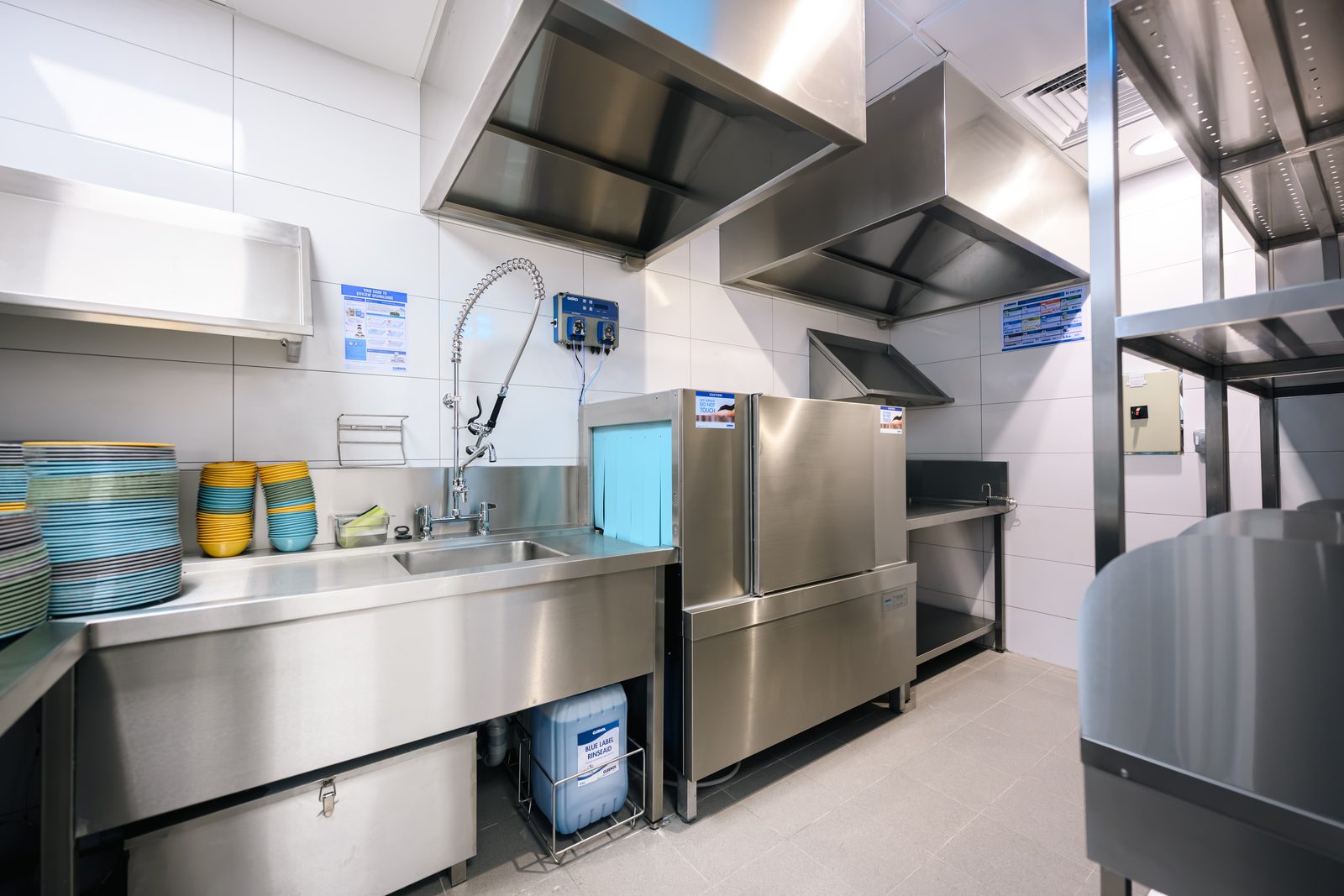
A dishwasher is only as good as what is either side of it. The three things that most often go wrong:
Tabling. A dirty side long enough to land a service on, and a clean side long enough to let racks dry before anyone touches them. Undersize either and the machine idles while staff stack, which is the real reason a kitchen feels short of washing capacity when the spec says otherwise.
Steam. Hood-type and conveyor machines put a lot of moisture into the room. That needs extraction sized for it, or a condensate hood on machines built to take one. Without it the ceiling, the lights and the staff all suffer.
Services. Hot and cold supply, power to a local isolator, and dosing lines run so the chemical containers sit somewhere a person can actually change them.
Drainage, and whether you need a drain pump. A dishwasher drains by gravity unless it has a pump. That is fine when the drain is a floor gully next to the machine. It is not fine when the drainage point is on the wall — common in units where the shell was built before anyone knew where the wash-up was going — because gravity will not lift waste up to it. In that case the machine needs a drain pump, and that is a specification decision, not a site fix. All three machines we stock have a drain pump built in, so a wall drain is not a problem with them — but it is worth settling early on any machine, because retrofitting a pump is far more disruptive than specifying one.
Run the waste generously while you are at it. Dishwasher and sink drainage carries grease, and grease collects in elbows and tight bends. A narrow run with sharp corners is a callout waiting to happen.
Installation is included in the price we quote unless we tell you otherwise. Water treatment is quoted as its own line, so you can see what it costs and what it is for. How the design stage sets this up →